
Kids read notes faster with short, daily practice on a few notes at a time, and with notes from the song they are learning. Speed comes from many easy repeats, not from a timer. This guide gives a simple plan, and shows how flash cards and Sight Reading in Pianu fit into it.
Why is reading notes hard for young children?
Reading music asks a child to do three things at once: see a note on the staff, know its name or place, and find the key under their finger. Each step is small. Together, they take time.
Many young children start by playing from memory or by ear. That is fine. But when a new piece comes, a child who cannot read the notes needs a grown-up for every bar. Quick note reading lets your child try new music alone.
Reading is a skill that grows with practice, like reading words. A child who reads a word many times soon knows it at a glance. Notes work the same way.
How do I start with note reading?
Start small and start with the music your child already plays.
- Find a home note. Many teachers start with middle C. Show your child where it is on the staff and on the keys.
- Learn the musical alphabet. The notes go A, B, C, D, E, F, G, and then start again. Say it forwards and backwards.
- Step up and down. A note one step higher on the staff is the next white key to the right. One step lower is the next key to the left.
- Use the song. Point to notes in the current piece and ask, "Which key is this?" Start with the first bar.
- Add a few notes at a time. When the notes in the song feel easy, add new ones.
Keep each reading game to a few minutes. Stop while your child still enjoys it.
How do flash cards from the song help?
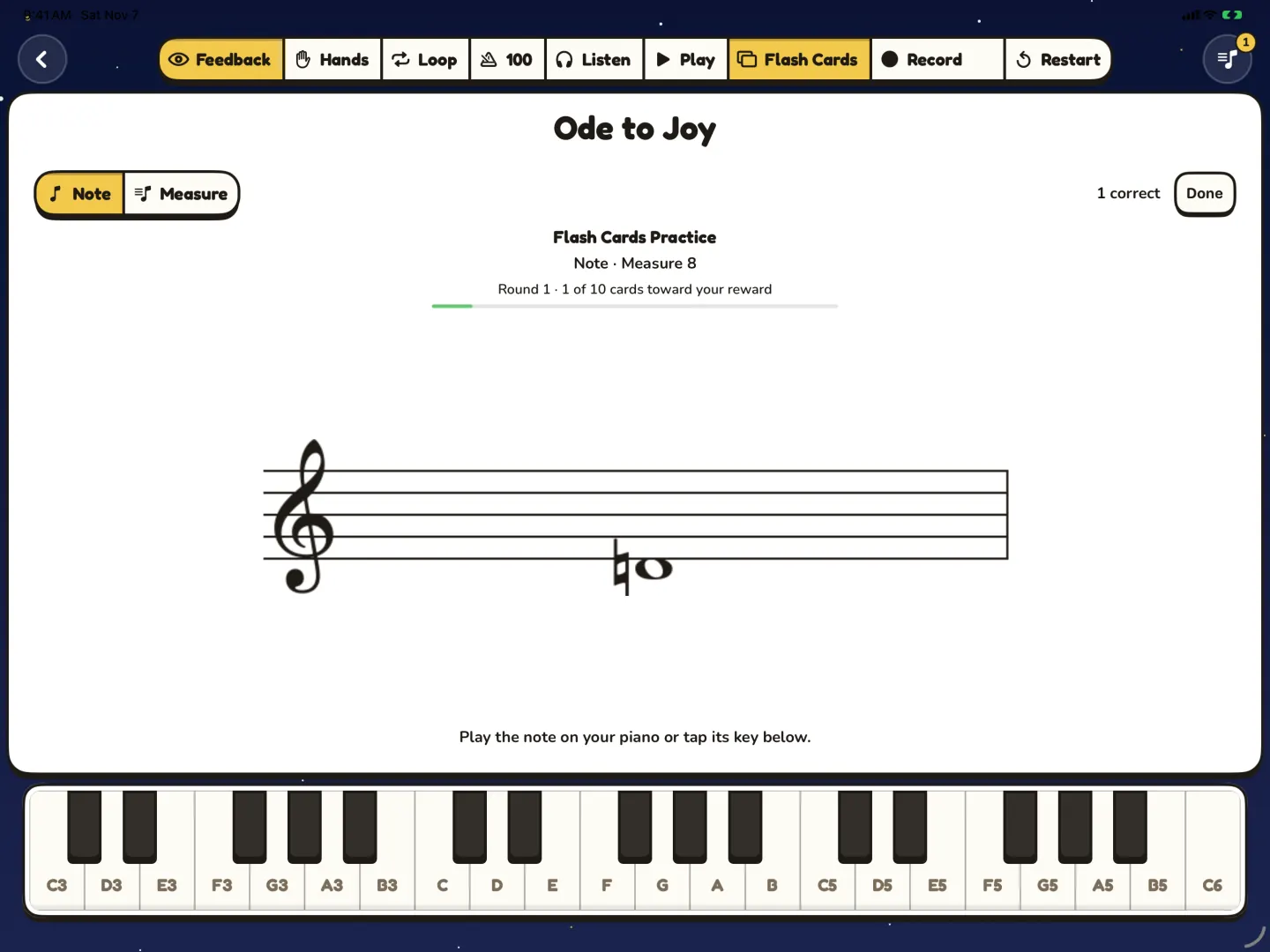
Flash cards work best when the notes on them matter today. In Pianu, flash cards are made from the song's own notes and bars. Your child sees a card, and plays the note on the piano or taps its key on the on-screen keys. There is no timer.
The picture at the top of this post shows a card in Note mode from bar 8 of the song. There is also a Measure mode, for cards with the notes of a bar.
Here is a short flash card routine:
- Open the song your child is learning, and start Flash Cards.
- Begin with Note cards. Let your child say the note name, then find the key.
- When single notes feel easy, try Measure cards.
- Stop after a few minutes, on a card your child found.
Because the cards come from the song, every note your child finds is a note they will see again in the piece. Reading practice and song practice help each other.
For a first look at flash cards and Sight Reading, read piano for kids: how to start at home.
How does Sight Reading in Training help?
Flash cards stay close to one song. Sight Reading is a game away from the song. Training on iPad has Sight Reading and Rhythm Reading.
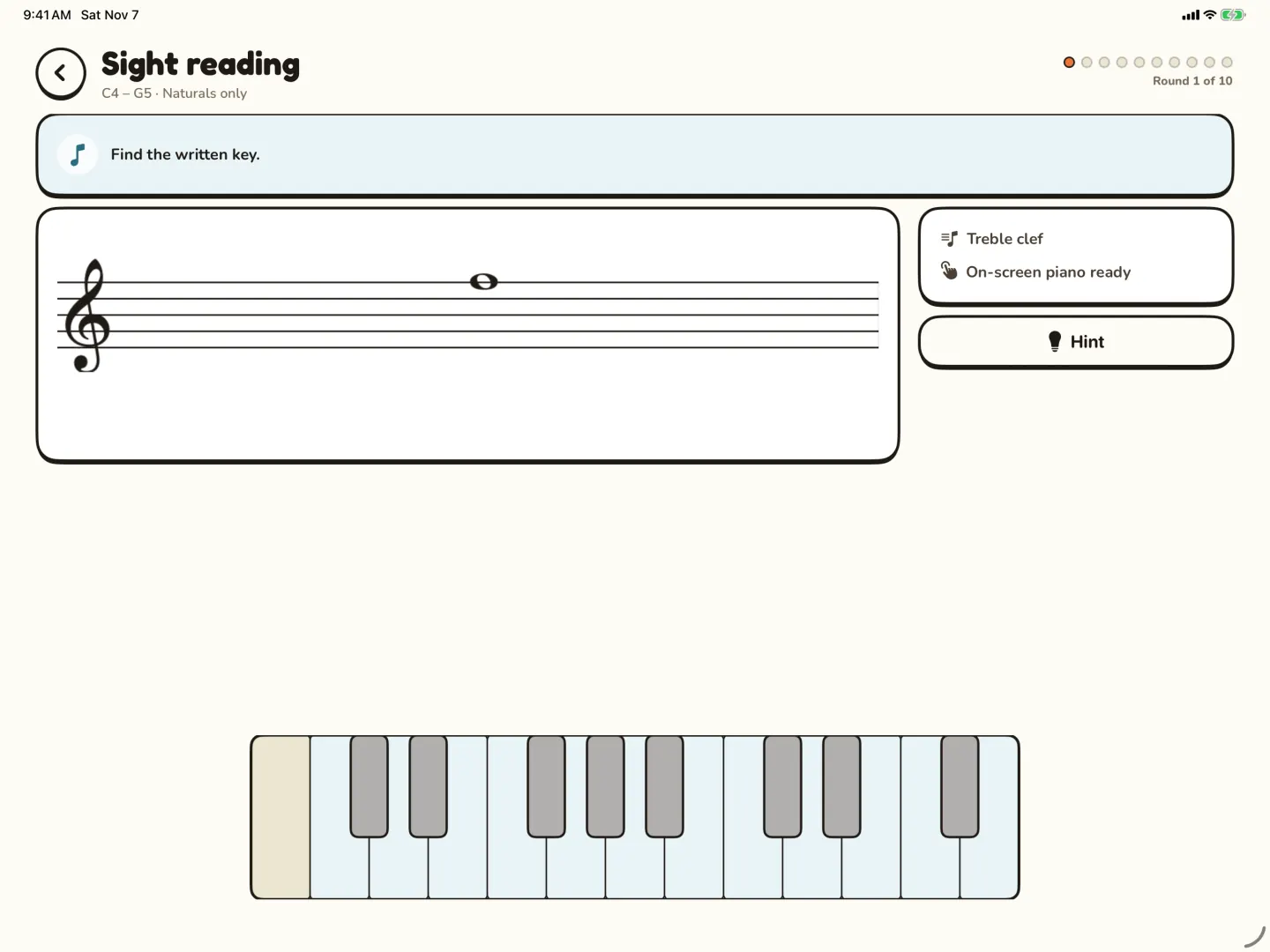
In a Sight Reading round, Pianu shows a written note, and your child finds the key. In the sample below, the round uses the treble clef and notes from C4 to G5, naturals only. A Hint button is there when your child is stuck.
A simple plan is to use both:
| Game | What it trains | When to use it |
|---|---|---|
| Flash cards | The notes in the current song | When you start a new piece |
| Sight Reading | Single written notes, away from the song | On days when the song is going well |
| Reading the song in Practice | Notes in their real place, one after another | Every practice |
How do we move from single notes to reading a real piece?
Single notes are a start. A real piece has notes one after another, with a rhythm. Help your child make that step slowly.
- Read before you play. Look at the first line together. Say the note names, then play.
- Look for patterns. Does the melody go up by steps? Does a bar repeat? Patterns let your child read groups of notes, not one note at a time.
- Keep the eyes on the page. Remind your child to look at the score, not at their hands, as often as they can.
- Let the score wait. In Pianu Practice, the score waits for the right note, so your child can read at their own speed.
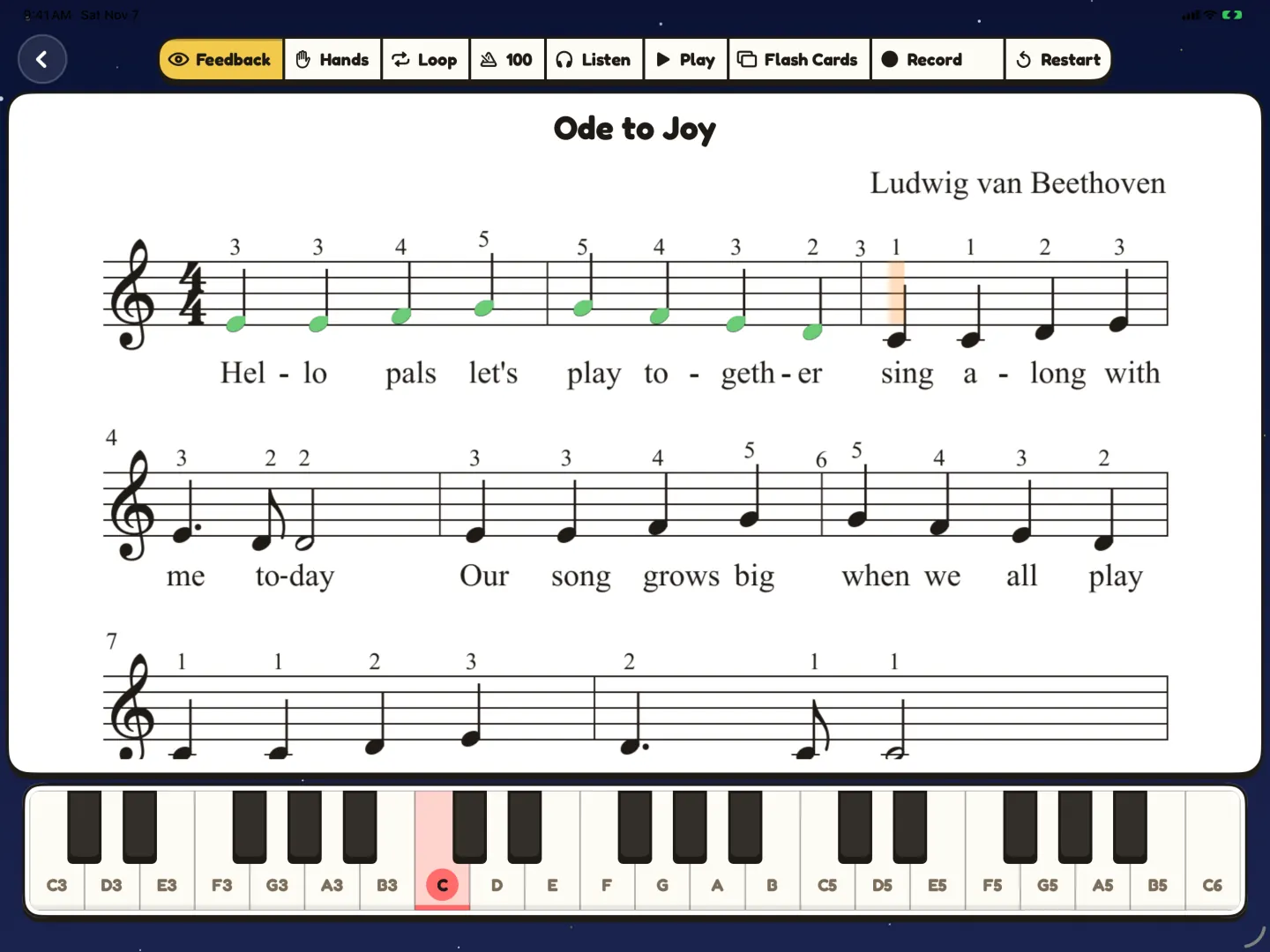
As your child reads the song, the notes played right turn green. A wrong note shows on the screen, with no penalty, and your child can try again. Fast reading comes later. First comes correct reading at an easy speed.
How long until my child reads notes quickly?
Every child is different. Some children pick up notes in a few weeks, others need longer. Small daily practice can help more than one long session a week. Watch for small signs of progress: your child names a note without counting lines, or plays a new bar without help.
Praise the progress you see. "You found that note so quickly!" tells your child that the practice works.
To see all the practice tools in one place, read about piano practice for kids on iPad.
Read more: Practice guide
Questions parents ask
Should my child learn note names with letters on the keys?
Letters can help at the very start. Try to move the eyes back to the page soon, so your child reads the note on the staff, not the sticker on the key.
How many new notes should a child learn at once?
Only a few. Start with the notes in the current song. Add a new note when the old ones feel easy.
Is it a problem if my child plays by ear and does not read?
Playing by ear is a good skill. Reading is a second skill. Short daily reading games let your child build both.
Why do flash cards from the song help more than random notes?
The notes on the cards are the notes your child needs today. Each card they find is a note they will meet again in the piece.
Try Pianu free for 7 days.
Try free for 7 days